What's actually breaking down
High-output people spend years asking their physiology to deliver more than it can sustainably produce. The system compensates beautifully at first. Cortisol calibrates upward. Mitochondria run harder. The autonomic nervous system stays sympathetic-dominant for longer stretches. Substrate use shifts toward whichever fuel is most available rather than whichever is most efficient.
Eventually the compensation itself becomes the problem. Cortisol stops calibrating. Mitochondrial output drops. The nervous system can no longer downshift to recover. Energy slips. Sleep stops repairing. Hormones drift. Recovery from training, stress, or illness takes longer than it should.
Standard workups miss this for a structural reason. They look at single systems in isolation, against population reference ranges, on a single day. Allostatic load shows up as a pattern across systems, against your own baseline, over time. The labs come back "normal" because each individual marker is still inside the bell curve, even when every marker has drifted in the same direction.
My work is identifying that pattern, mapping it to the specific physiology that's overloaded, and restoring capacity at the mechanism rather than chasing symptoms one at a time.
Inside Your Physiology
01
Metabolic Buffering
Can your body sustain energy output without crashing?
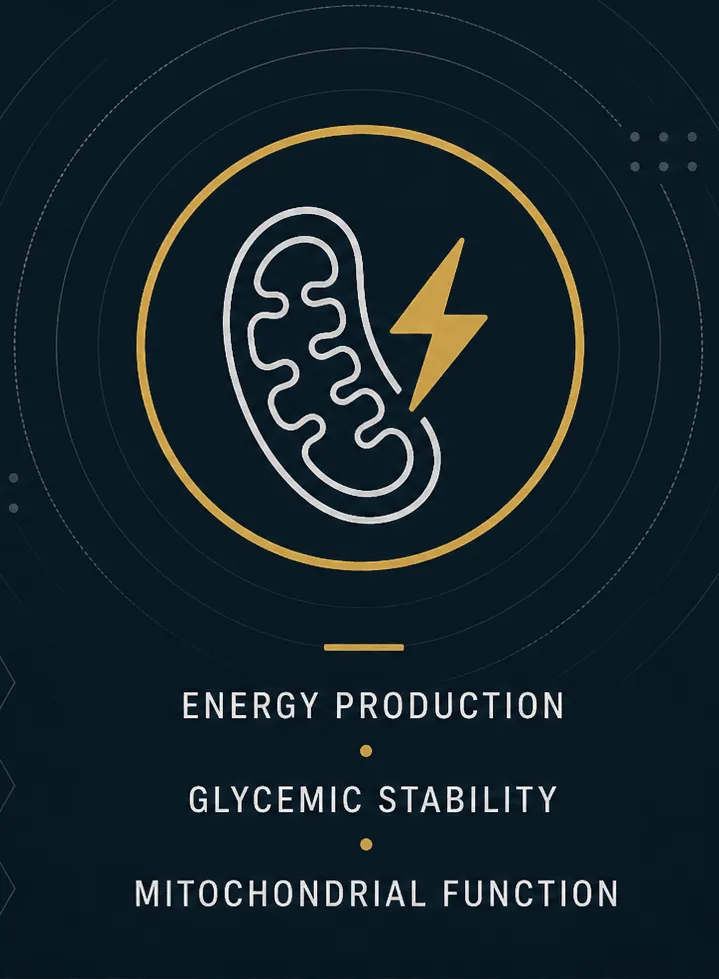
Mitochondrial function, substrate oxidation, glycemic stability. This is where the fatigue lives. When metabolic buffering is intact, your body shifts cleanly between fuel sources, sustains output across the day, and recovers from glycemic load without symptoms. When it's overloaded, you get afternoon crashes, post-meal fog, exercise that drains rather than fuels, and a creeping dependence on caffeine to feel functional.
Restoration here is not a diet plan. It is a targeted rebuild of mitochondrial capacity, substrate flexibility, and glycemic control, mapped to your specific overload pattern.
02
ANS Balance
Is your nervous system locked in sympathetic drive?
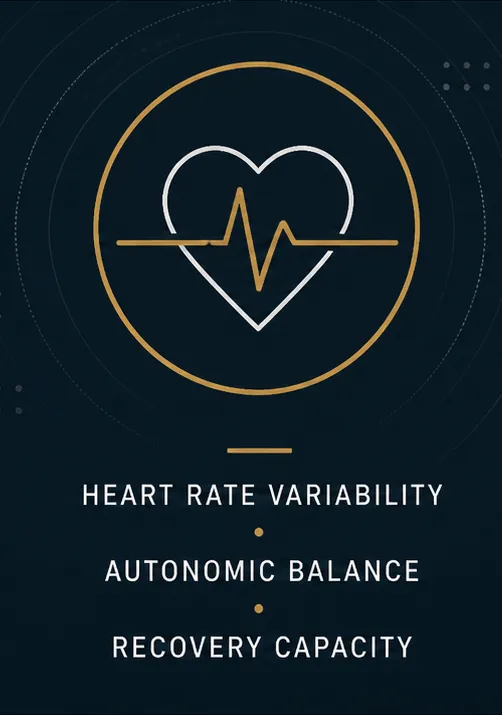
Heart rate variability, vagal tone, the ability to actually downshift between outputs. The sympathetic system is built for short, high-output bursts followed by parasympathetic recovery. High-output professionals frequently get stuck in sympathetic dominance for years at a time. The body never gets the recovery signal. Sleep becomes shallow. Digestion stalls. Recovery from training plateaus. The "rest" you're getting is not actually restorative.
Restoration here is HRV-guided, autonomic retraining work that rebuilds the body's ability to downshift on demand.
03
HPA Axis Regulation
Is the cortisol cascade calibrated?
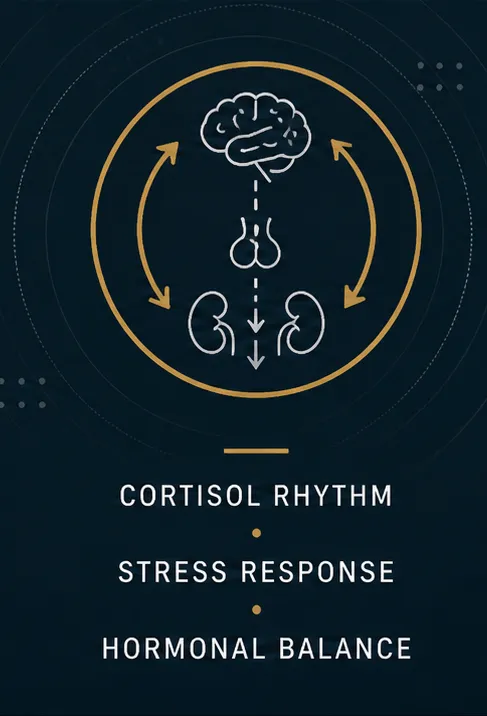
The hypothalamic-pituitary-adrenal axis is the bridge between chronic stress and metabolic breakdown. It controls when cortisol rises, when it falls, and how the body uses that signal to mobilize energy or shift into recovery. When the HPA axis is calibrated, mornings have lift, evenings have descent, and stress comes and goes without sticking. When it's dysregulated, you get tired-but-wired evenings, flat mornings, weight that won't shift, and a sense that the floor under your output keeps lowering.
Restoration here is not adrenal supplementation. It is targeted recalibration of the cortisol cascade, often involving sleep architecture, circadian alignment, and specific physiological inputs that the axis responds to.
Inside Your Physiology
01
Metabolic Buffering
Can your body sustain energy output without crashing?
Mitochondrial function, substrate oxidation, glycemic stability. This is where the fatigue lives. When metabolic buffering is intact, your body shifts cleanly between fuel sources, sustains output across the day, and recovers from glycemic load without symptoms. When it's overloaded, you get afternoon crashes, post-meal fog, exercise that drains rather than fuels, and a creeping dependence on caffeine to feel functional.
Restoration here is not a diet plan. It is a targeted rebuild of mitochondrial capacity, substrate flexibility, and glycemic control, mapped to your specific overload pattern.
02
ANS Balance
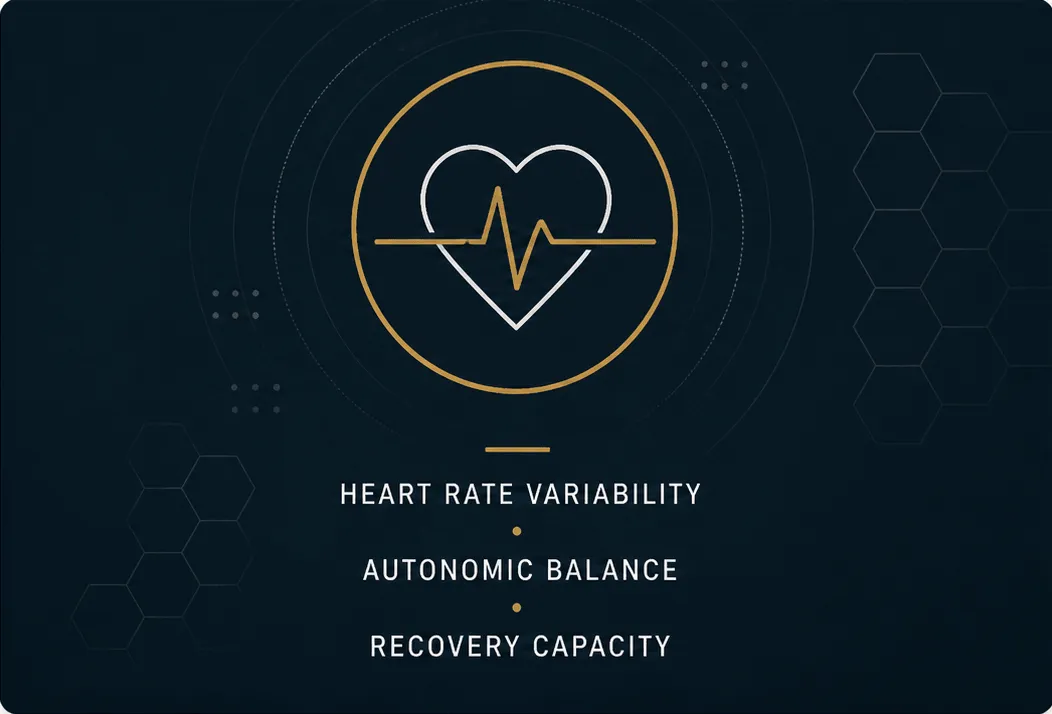
Is your nervous system locked in sympathetic drive?
Heart rate variability, vagal tone, the ability to actually downshift between outputs. The sympathetic system is built for short, high-output bursts followed by parasympathetic recovery. High-output professionals frequently get stuck in sympathetic dominance for years at a time. The body never gets the recovery signal. Sleep becomes shallow. Digestion stalls. Recovery from training plateaus. The "rest" you're getting is not actually restorative.
Restoration here is HRV-guided, autonomic retraining work that rebuilds the body's ability to downshift on demand.
03
HPA Axis Regulation
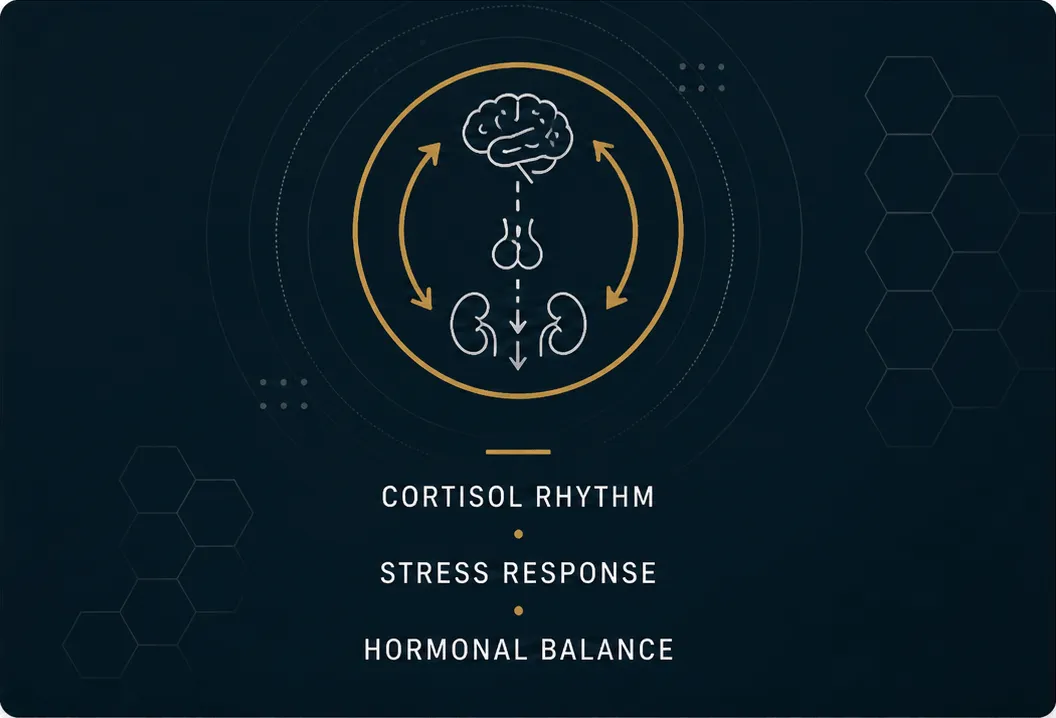
Is the cortisol cascade calibrated?
The hypothalamic-pituitary-adrenal axis is the bridge between chronic stress and metabolic breakdown. It controls when cortisol rises, when it falls, and how the body uses that signal to mobilize energy or shift into recovery. When the HPA axis is calibrated, mornings have lift, evenings have descent, and stress comes and goes without sticking. When it's dysregulated, you get tired-but-wired evenings, flat mornings, weight that won't shift, and a sense that the floor under your output keeps lowering.
Restoration here is not adrenal supplementation. It is targeted recalibration of the cortisol cascade, often involving sleep architecture, circadian alignment, and specific physiological inputs that the axis responds to.
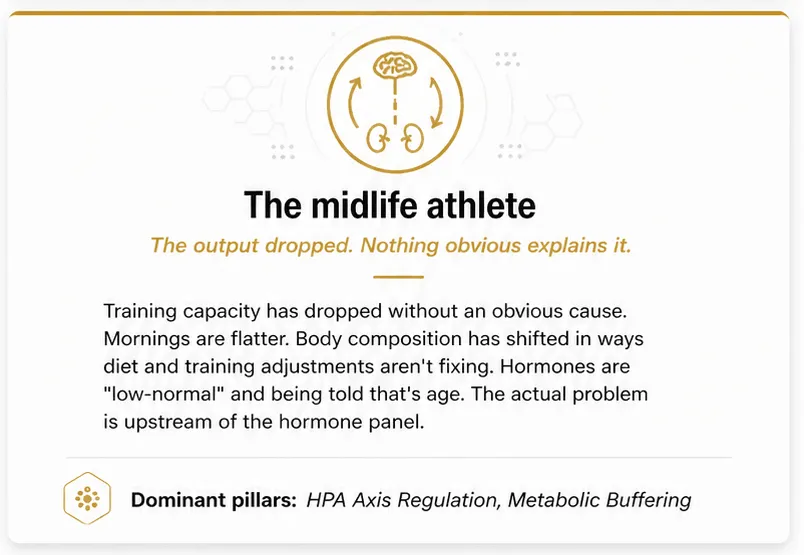
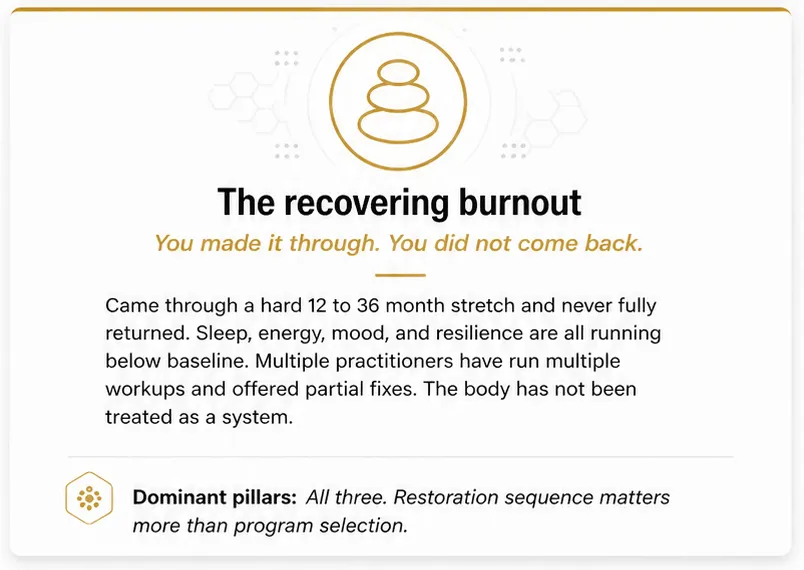
What this looks like in real people
Three patterns I see most often.
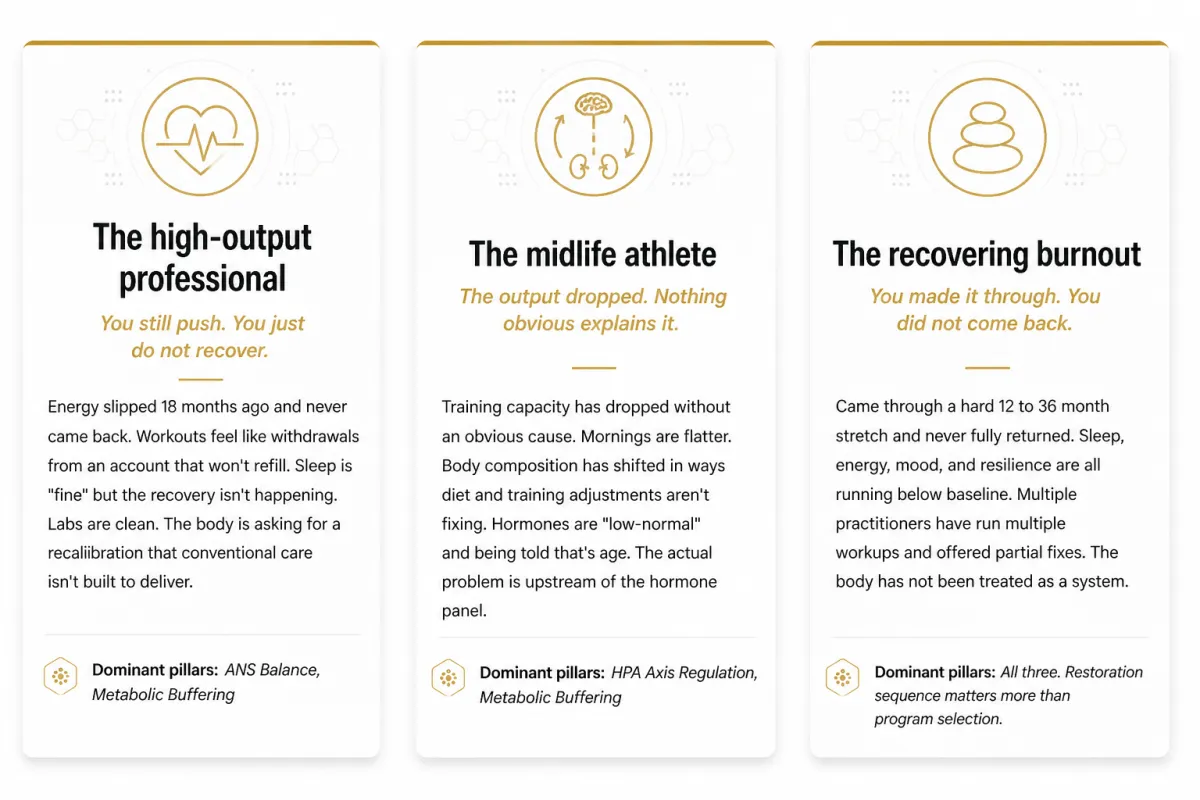
What this looks like in real people
Three patterns I see most often.
Recent briefs in this domain

Why You Sleep 8 Hours and Still Wake Up Exhausted (It's Not What You Think)
Getting eight hours and still waking up unrestored is not a discipline problem. Sleep restoration depends on four systems. When one is loaded, you get the hours and miss the recovery. Here is how to t... ...more
Clinical Intel ,Metabolic Health &Recovery & Burnout
June 30, 2026•5 min read

Your Hydration Mix Is Solving the Wrong Problem
Most hydration mixes are built around one number: sodium, often 700 to 1,000 mg per serving. What electrolytes are actually for, why most people aren't short on sodium, and the ratio that matters more... ...more
Clinical Intel ,Metabolic Health &Recovery & Burnout
June 17, 2026•5 min read

The Four Systems That Control Performance
Standard labs measure disease. These four systems - Metabolic Buffering, ANS Balance, HPA Axis Regulation, and Structural Resilience - control performance. Most high performers have never measured any... ...more
The Performance Brief ,Metabolic Health Recovery & Burnout &Performance Intelligence
June 09, 2026•3 min read
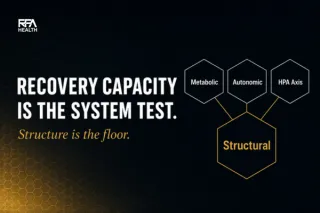
Recovery Capacity Is the System Test. Structure Is the Floor.
Recovery is not a passive state. It is active physiology, governed by four systems. When the structural floor gives, the other three cannot do their work. Here is the integration model. ...more
Recovery & Burnout
May 27, 2026•8 min read

The Mitochondria Problem Nobody Is Testing For
If your output is degrading but the workup came back clean, the panel that was run does not answer your question. The Organic Acids Test measures the cellular engine directly. Here are the five marker... ...more
The Performance Brief ,Metabolic Health Recovery & Burnout &Performance Intelligence
May 26, 2026•6 min read

Hormone Therapy Without Workup Is Surrender
If your doctor prescribed hormone replacement without first measuring the upstream regulator, they did not treat you. They sold you a product. Here is what the workup should have measured before the p... ...more
Functional Medicine ,The Performance Brief Metabolic Health Recovery & Burnout &Performance Intelligence
May 19, 2026•4 min read
If you'd like to work with me on this
I deliver biochemistry and physiology work virtually through RPA Health. The intake process maps your specific overload pattern across these three pillars and matches you to the right starting protocol.
The Performance Brief Clinical breakdowns,
every week.


